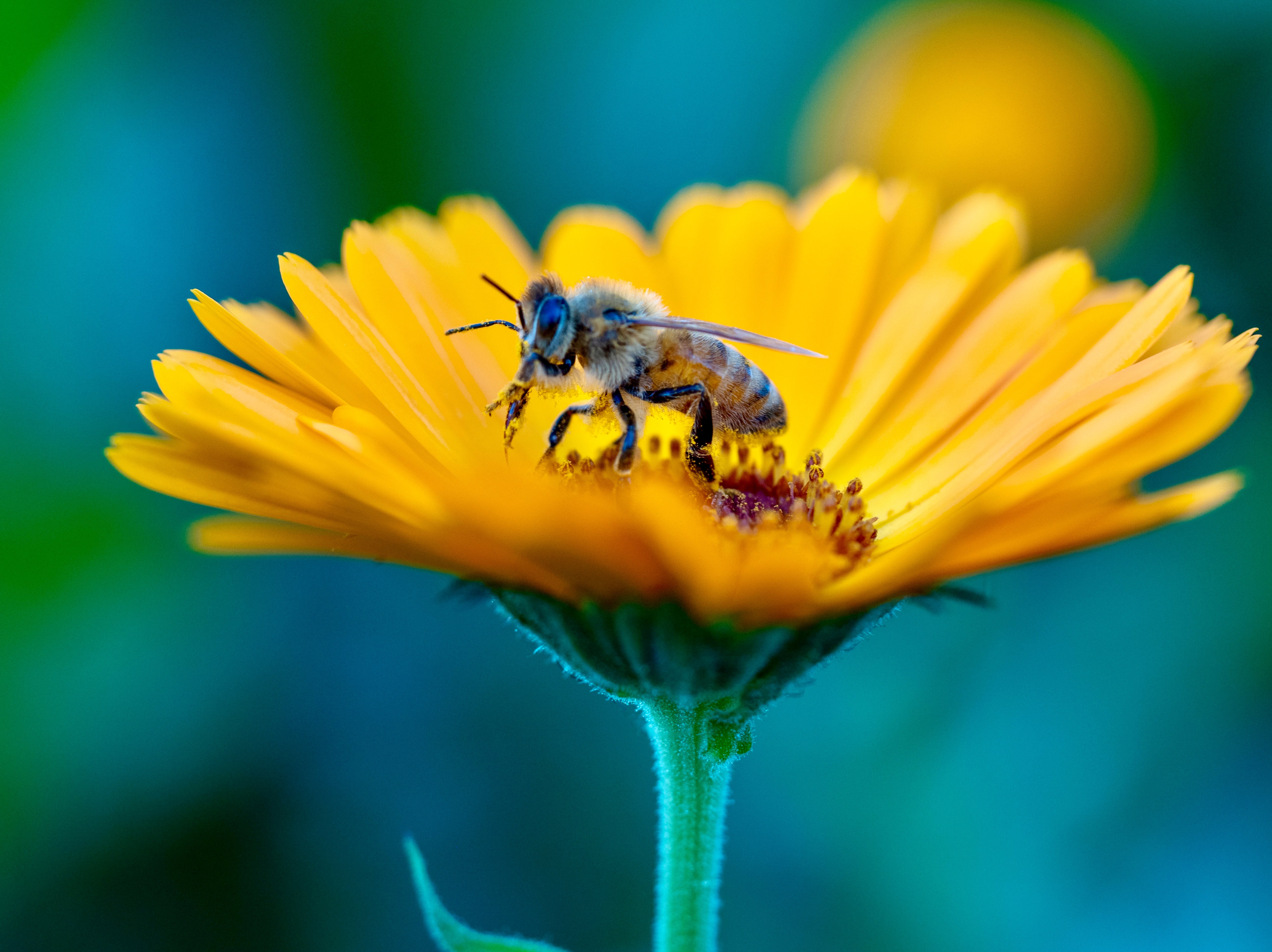
Honey bees and bumble bees serve as vital pollinators, often requiring protection rather than removal. Honey bees typically organize in large colonies, occasionally swarming on branches while scouting for permanent hives. Bumble bees, identified by their fuzzy, rounded appearance, prefer nesting in low-lying areas like abandoned rodent burrows or thick vegetation. These species generally remain docile unless their nesting sites face direct disruption.
Carpenter bees present a different challenge due to their wood-boring habits. Unlike social bees, females tunnel into untreated wood, including decks, fences, and siding, potentially causing significant property damage over time. Homeowners frequently mistake them for bumble bees, but a close inspection reveals the distinction: carpenter bees possess smooth, shiny black abdomens, whereas bumble bees are covered in dense hair. Signs of infestation include perfectly round entry holes, small piles of sawdust, and yellow staining on wood surfaces.
Professional pest management relies on this identification to choose the correct course of action. Experts evaluate whether the bees threaten the home's structure or if they merely require exclusion techniques. By recognizing these behavioral and physical differences, residents can manage their property while safeguarding the essential pollinators that support local gardens and agriculture.



Comments (0)
No comments yet. Be the first!