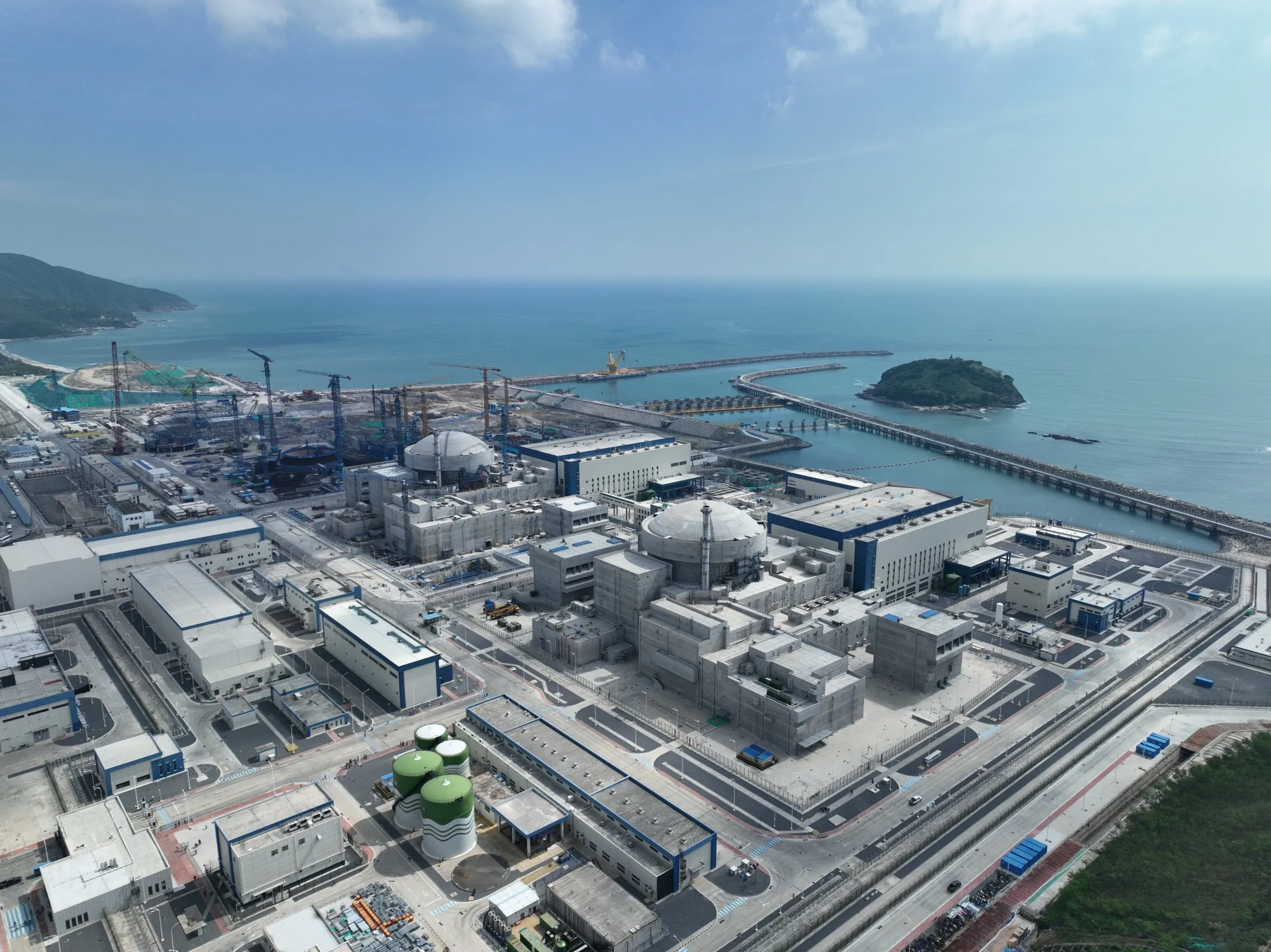
The latest Statistical Review of World Energy reveals that while worldwide nuclear generation rose by 1.3% last year, China’s output surged by 34 terawatt-hours, effectively masking stagnation across the rest of the planet. Over the past decade, global nuclear production grew by 270 terawatt-hours, yet China alone added 314 terawatt-hours. Excluding the Chinese contribution, the rest of the world produced 44 terawatt-hours less nuclear electricity in 2025 than it did ten years prior.
The United States remains the largest producer, generating 826 terawatt-hours, or 29% of the global total. Despite this lead, American output has remained essentially flat since 2015. At its current trajectory, China, now the world’s second-largest producer, is on track to overtake the U.S. in roughly five years. Meanwhile, Europe’s nuclear sector has seen a 22% decline over the same decade, with production falling from 968 terawatt-hours to 759 terawatt-hours.
The Shift Toward Asia
Regional data highlights a fundamental pivot in nuclear energy. The Asia-Pacific region has more than doubled its output since 2015, now accounting for nearly 30% of global generation. Conversely, OECD nations—which still hold two-thirds of the world's existing reactor capacity—are no longer driving growth. Despite record-breaking generation levels, nuclear power’s share of the total global energy supply actually dipped slightly to 5.17% in 2025. Even in China, where rapid construction is the norm, nuclear energy still accounts for only about 3.3% of the country’s massive energy system, suggesting significant untapped potential for continued expansion.



Comments (0)
No comments yet. Be the first!