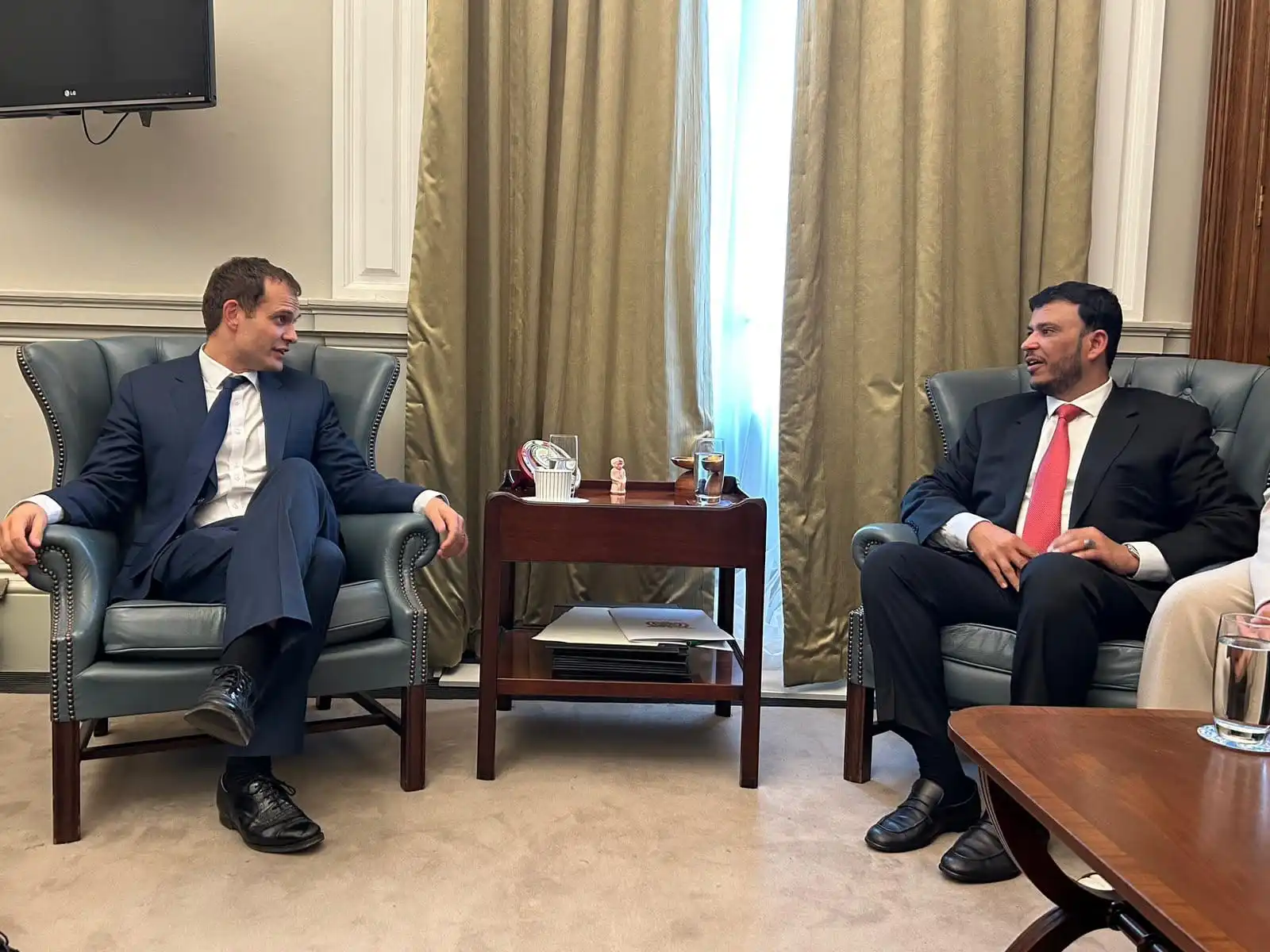
Bawazir stated that the threat to international trade originated the day Sanaa fell to Houthi militias, transforming a local conflict into a global security challenge. He warned that relying solely on aerial campaigns or maritime escorts offers only temporary relief, as the underlying danger persists as long as an armed group operates outside the state’s control. Instead of requesting foreign military intervention to fight on Yemen's behalf, he urged the international community to bolster the Yemeni government’s capacity to govern its own territory.
Highlighting evidence from UN Panel of Experts reports between 2023 and 2025, the Vice President pointed to documented Iranian financial and military support, including the transfer of missile and drone technology. He rejected the notion of accepting security assurances from the Houthis, cautioning that such engagement risks legitimizing an entity that has already proven its willingness to disrupt global energy supplies. For Bawazir, the path forward requires a shift in strategy: moving beyond reactive military strikes toward a comprehensive effort to stabilize Yemen and empower its institutions, which he described as a necessary investment in regional and global security.


Comments (0)
No comments yet. Be the first!