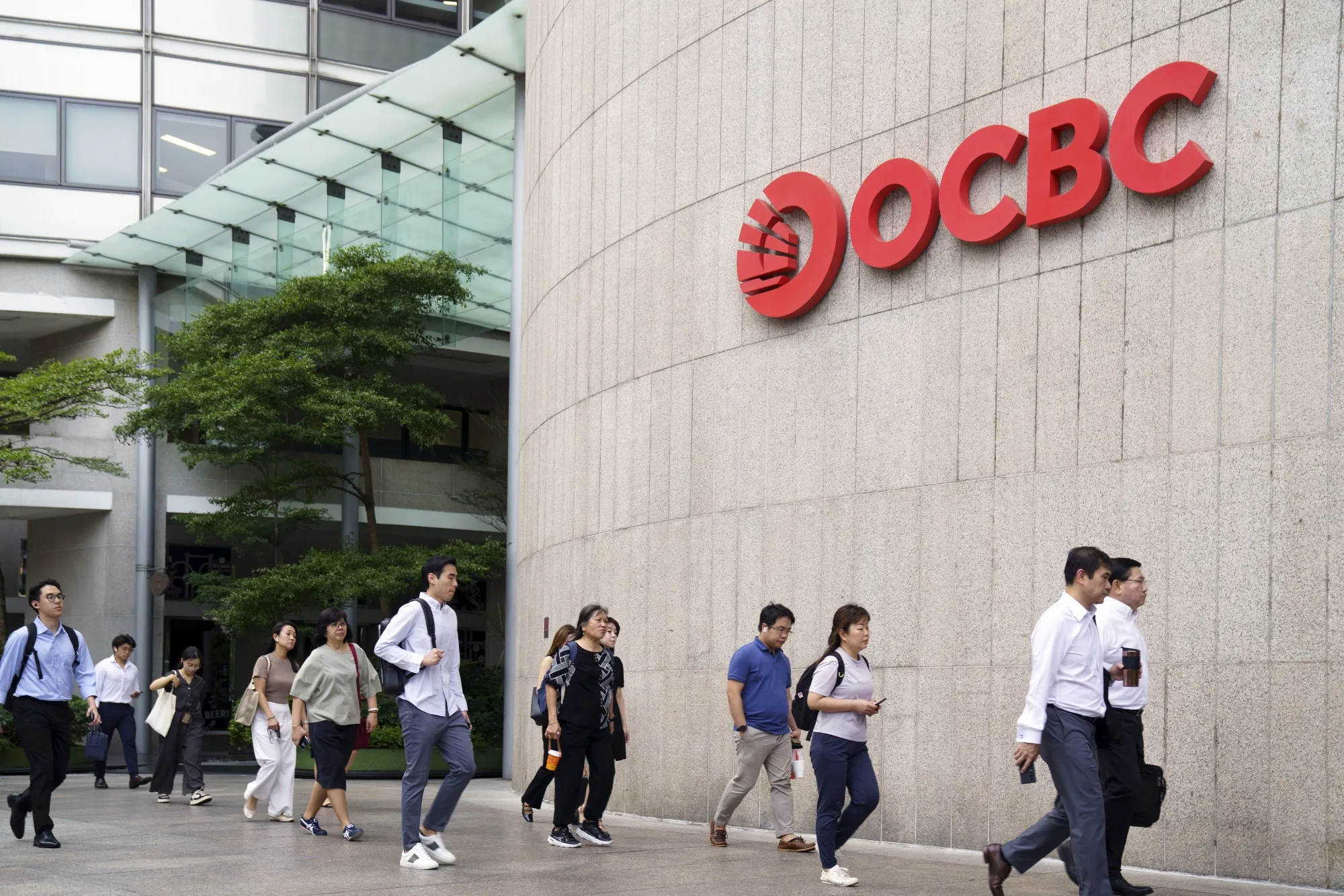
Chief Executive Tan Teck Long gave the revised outlook during an earnings call Friday. OCBC had previously forecast high-single-digit to low-double-digit loan growth and total-income growth of at least a mid-single-digit percentage. Tan said the bank will issue its 2027 guidance in February, adding that the outlook would “depend on how the energy crisis triggered by the U.S.-Iran war turns out.”
OCBC is also watching developments in Indonesia, including index provider MSCI Inc.’s warning that it could reclassify the country from emerging-market to “standalone” status. Tan said the legal completion of OCBC’s acquisition of HSBC Holdings’ wealth management and retail banking business in Indonesia is scheduled for May 2027. “Right now, we are in the integration stage,” he said. In May, OCBC said the deal would transfer assets and liabilities from PT Bank HSBC Indonesia’s retail banking and wealth management operations to OCBC Indonesia.
Net profit for the three months ended September was S$2.04 billion (US$1.60 billion), while total income fell 2% to S$3.73 billion. Net interest income rose 4% to S$2.31 billion, but net interest margin declined 18 basis points to 1.66% as interest rates fell. Noninterest income dropped 10% to S$1.42 billion, mainly reflecting weaker investment performance at insurance unit Great Eastern Holdings.
OCBC shares fell as much as 2.1% to S$27.35 in early trading before trimming the loss to about 1.0% around midday. Its results completed the earnings season for Singapore’s three major banks. DBS Group reported a larger-than-expected profit decline earlier in the week; United Overseas Bank’s profit nearly tripled from a year earlier on sharply lower provisions, but fell from the previous quarter. Both reported lower total income.
Singapore bank stocks have retreated in recent weeks after a run of record highs, amid concerns about whether lenders can sustain earlier strong profitability. Macquarie analyst Jayden Vantarakis remained positive on the sector, saying gradually rising interest rates should support net interest income growth and long-term wealth-management drivers remain intact.




Comments (0)
No comments yet. Be the first!