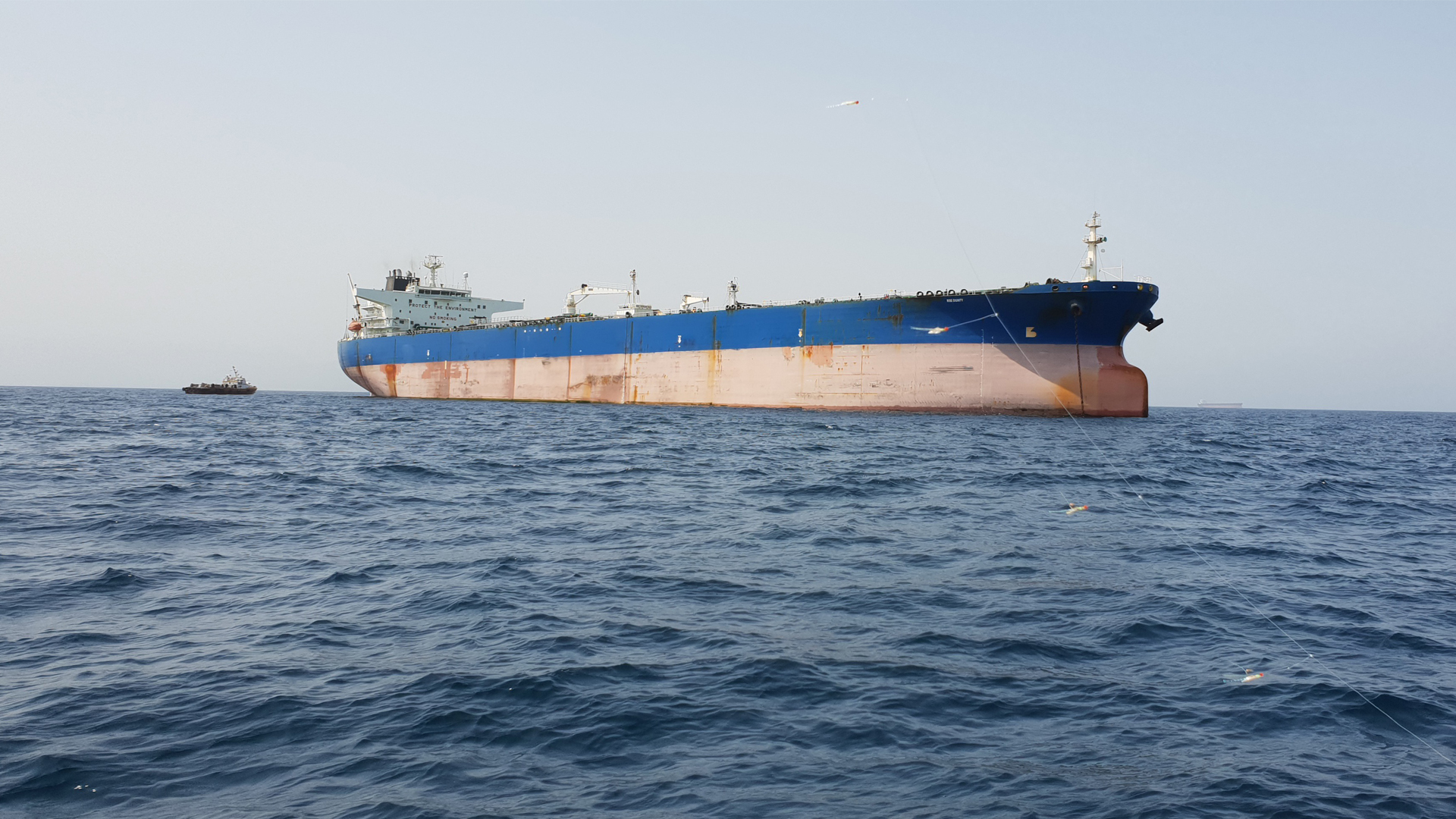
The campaign gained momentum on November 19, when IRGC-affiliated Fars news agency published an argument for a “convoy of oil tankers.” That day, ship-tracking service TankerTrackers.com posted on X that “Iran appears to be preparing to ship out oil again.” No Iranian government body has announced a plan. The closest official signal came from IRGC spokesman Hossein Mohebbi, who told a Tehran gathering, “We will not allow the continued naval, land, and air blockade imposed on our country.”
Fars drew on the Shahnameh, Iran’s national epic, to argue that the country should not wait for U.S. permission to cross the blockade. The column said an attack on an Iranian tanker could prompt Tehran to target oil facilities in Qatar, Saudi Arabia and the United Arab Emirates. Lawmaker Ebrahim Azizi, who chairs parliament’s national security and foreign policy committee, wrote on X that Iran “cannot be blockaded.” Hard-line pundit Ruhollah Jomei described a supposed decision to load crude and send a tanker to China, Iran’s biggest oil buyer.
Hamidreza Azizi, an analyst with the International Crisis Group, said that if reports of a planned shipment were true, Iran was looking to “actively challenge the blockade.” A tanker getting through could undermine the blockade’s credibility, he wrote; stopping or striking one could give Tehran a trigger for retaliation. Kpler senior commodity analyst Homayoun Falakshahi cautioned that it was too early to say Iran had taken serious steps to break the blockade.
Kpler data show that 88.8 million barrels of Iranian oil were on the water outside the blockade zone on July 14, when the blockade was reimposed. By mid-October, that amount had fallen to zero after the last cargoes were discharged in China. Another 43 million barrels remain inside the blockade area. Kpler has identified about 20 tankers near Kharg Island, Iran’s main export terminal; most are loaded but stationary, and only one has been observed moving.
On November 17, Kpler detected an Iranian tanker transferring crude to another vessel, one typically used for Russian fuel oil. Falakshahi said a technical problem could explain the transfer, which took place unusually close to Kharg Island. The United States first blockaded Iranian ports on April 13, lifted the measure on June 18, then reimposed it on July 14. The blockade has been in place for about 195 days in total, including 129 consecutive days. Senator Elizabeth Warren cited a cost of about $32.5 million a day, confirmed by acting Navy Secretary Hung Cao. Kpler has estimated Iran’s lost oil revenue at $200 million to $250 million daily.


Comments (0)
No comments yet. Be the first!