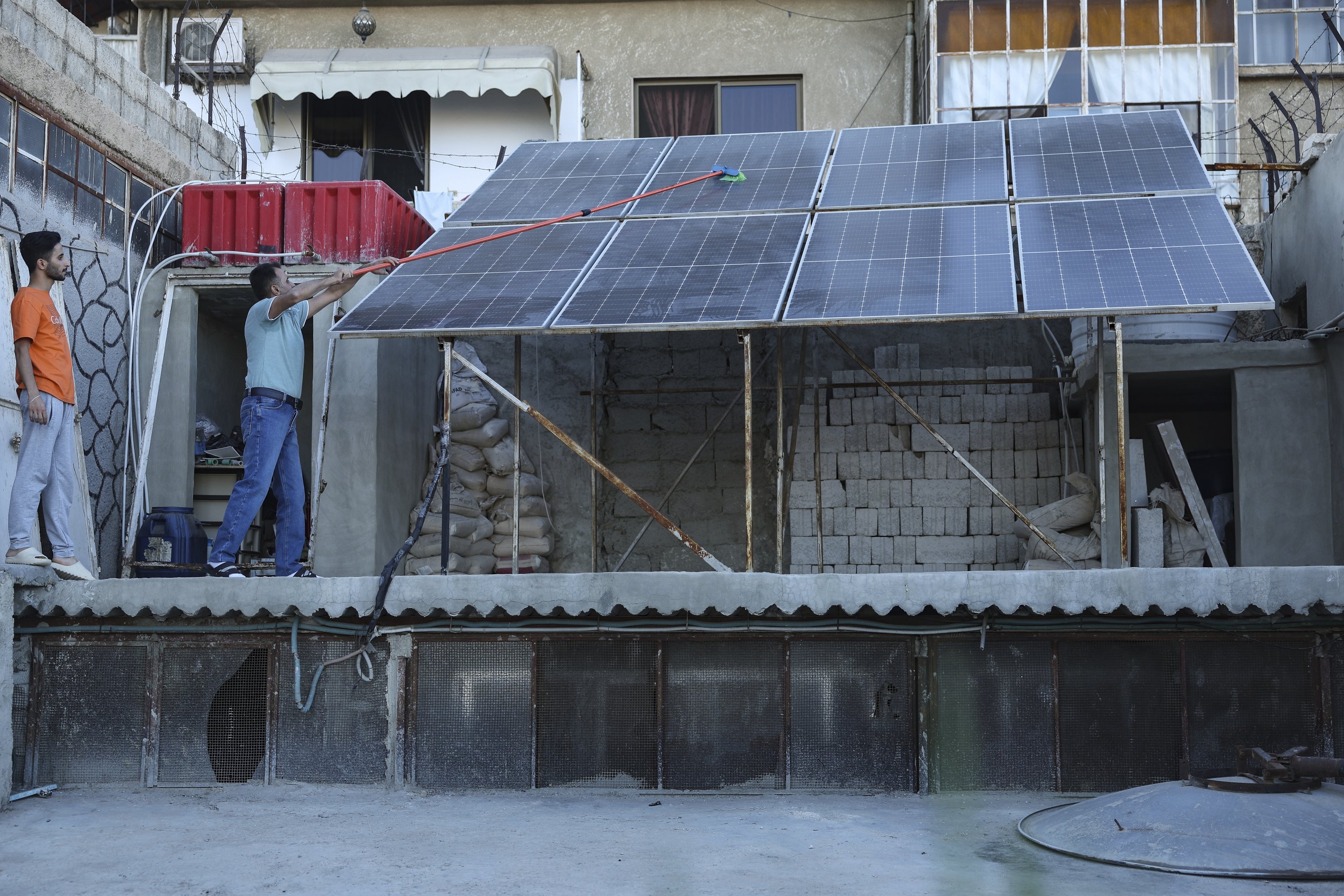
The expansion is not the result of a national transition plan. Years of war, sanctions, fuel shortages, infrastructure damage and economic collapse have left Syria generating less than one-fifth of its pre-war electricity. Roughly two-thirds of the grid is damaged or needs major repairs, while around a quarter of households are estimated to own some form of solar equipment.
Small systems can provide electricity without the fuel supply, transmission network and large-scale investment required by conventional power plants. A household can add a panel; shops, clinics and villages can install systems suited to their needs. Individually modest installations have become a significant share of Syria’s generating capacity, although their share of actual generation is lower and difficult to measure. Planned gas-fired plants could reduce solar’s percentage of total capacity as the grid is rebuilt, but they will not erase the systems already installed.
Lebanon has seen a similar shift. Decentralized solar capacity grew from about 90 MW in 2020 to roughly 1,200–1,300 MW by 2024, as homes, businesses and municipalities sought alternatives to long blackouts and costly diesel generators. In Yemen, a World Bank-backed off-grid program reached almost 800,000 people in its first phase. A 1.3-MW solar mini-grid in Goma, Democratic Republic of Congo, continued supporting water, communications and businesses during the city’s violent takeover.
These systems offer resilience, not a replacement for functioning government or national infrastructure. In Syria, many families cannot afford complete systems, which reportedly cost thousands of dollars. Uneven quality, unsafe wiring, counterfeit equipment and poorly managed lead-acid batteries bring further risks. Without ways to share or sell surplus electricity, households may also waste midday power.
The next step, according to the article’s author, is to connect isolated installations through mini-grids and community networks. Shared batteries and anchor customers such as clinics, schools and water pumps could help make local systems more reliable. That would require technical standards, consumer protections, workable tariffs and designs compatible with a restored national grid. National generation and transmission still matter; the longer-term goal is a hybrid system combining grid-scale power with distributed renewables.




Comments (0)
No comments yet. Be the first!