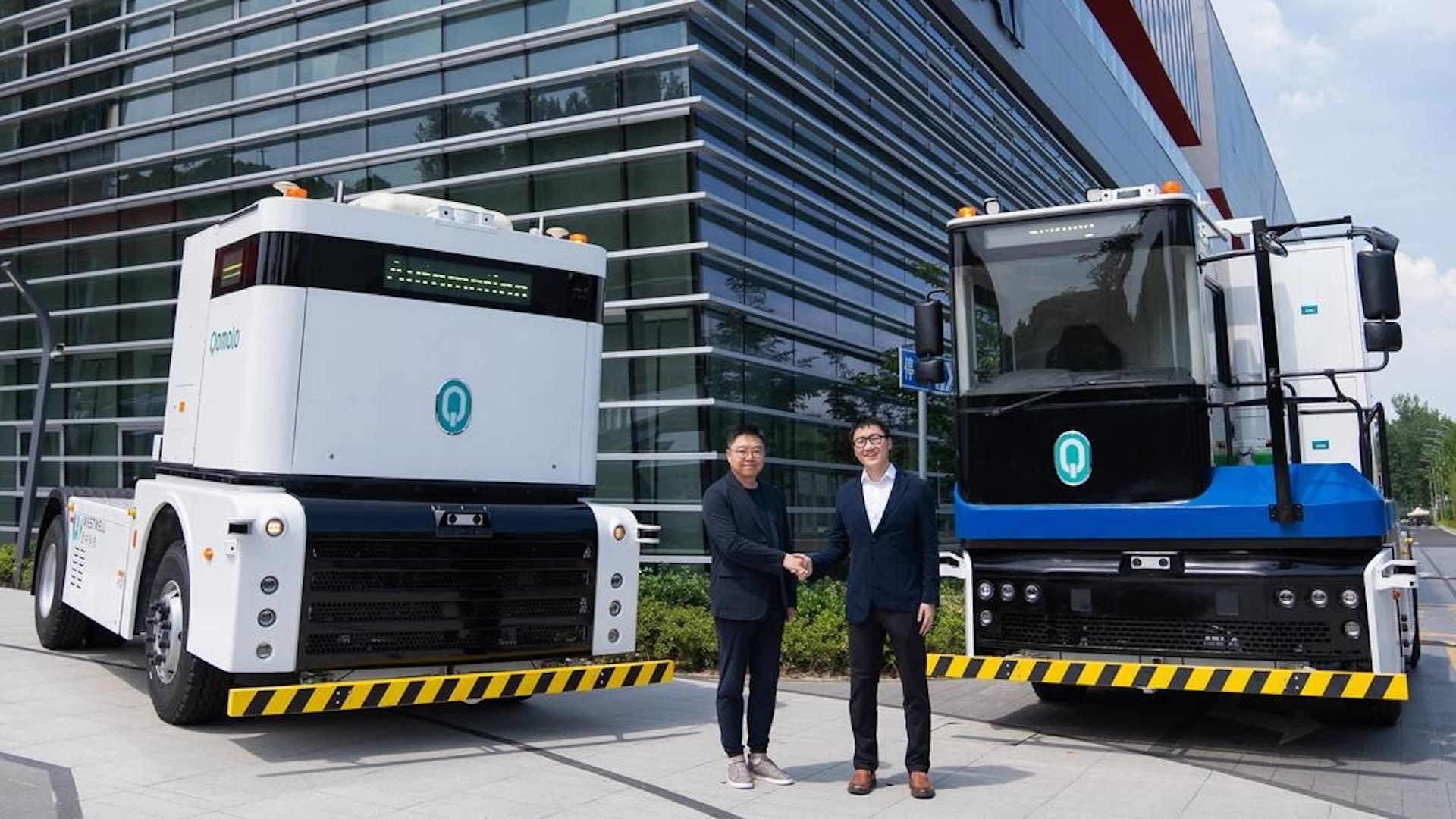
The company’s strategy centers on a dual-AI architecture that separates physical execution from high-level management. Its Q-Tractor platform, driven by the Q-Pilot autonomous system, utilizes Transformer-based models to navigate complex airside environments. These electric vehicles have achieved reliable, 24/7 operations, including automatic trailer coupling that eliminates the final manual bottleneck in terminal logistics.
Operational oversight is handled by the ReeWell management platform and WellFMS fleet system. These tools synchronize cargo movement with flight schedules and energy resources to maximize throughput. Beyond standard transport, Westwell is expanding into safety-critical infrastructure, such as the autonomous runway inspection systems currently under development at Shanghai Pudong International Airport.
Major facilities, including Hong Kong Air Cargo Terminals Limited (Hactl) and Ezhou Huahu International Airport, have already integrated these systems. By shifting toward collaborative ecosystems where AI coordinates human and machine labor, these hubs aim to maintain resilience as global logistics demands intensify.


Comments (0)
No comments yet. Be the first!