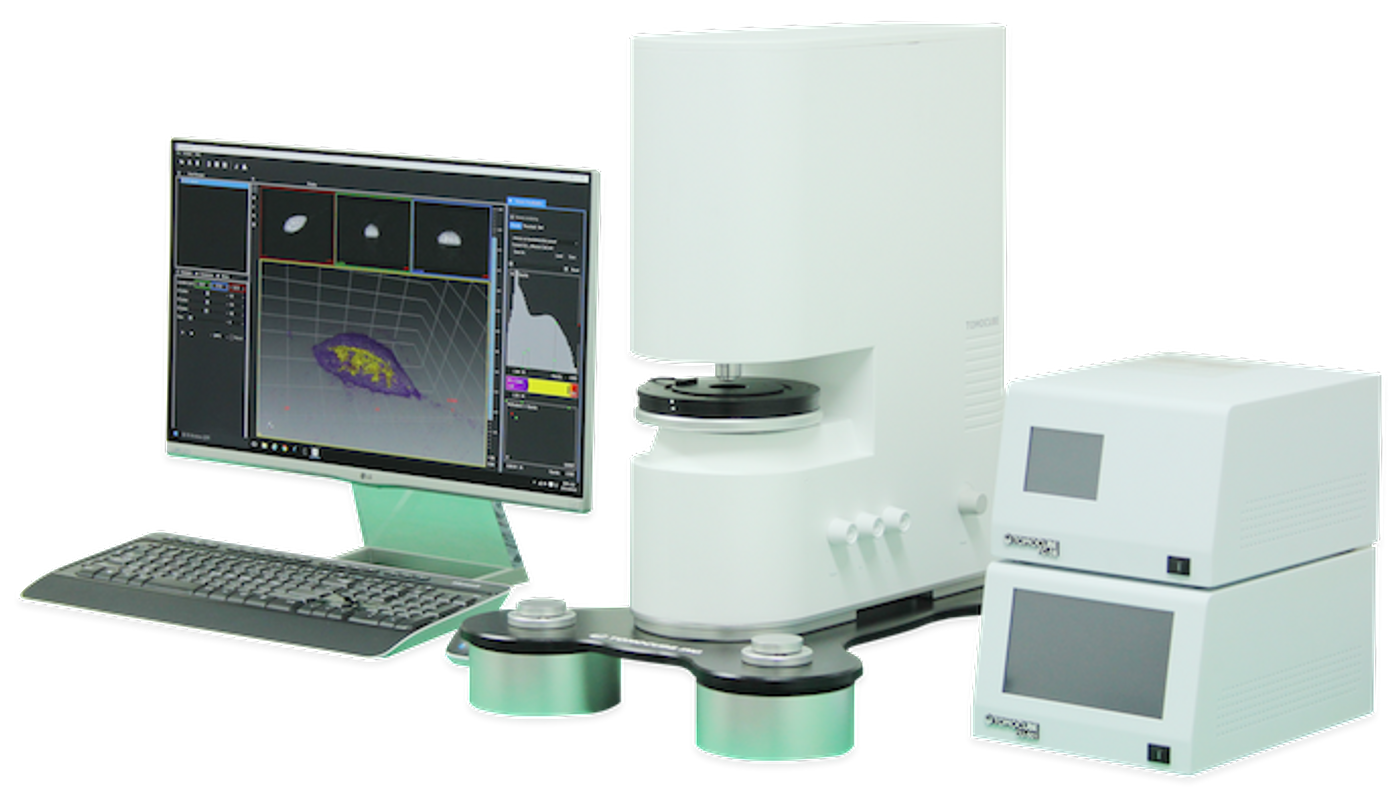
The HT-T1D integrates with existing automated optical inspection workflows to provide deep-tissue visibility into glass substrates. While standard inspection tools often flag surface-level anomalies, this system reconstructs internal morphology and depth profiles, exposing defects introduced during laser drilling, etching, and metallization. Using visible-light holotomography, the device achieves a refractive-index sensitivity of 10⁻⁴, allowing engineers to track how specific defects propagate across successive process stages. This non-destructive approach replaces traditional failure analysis methods that often require destroying samples, cutting diagnostic timelines from weeks down to minutes.
To manage the resulting data, Tomocube also launched its TomoAnalysis MI software platform. The tool processes 3D refractive-index volumes into actionable engineering reports, creating a unified workflow that bridges the gap between R&D investigation and production-line review. CEO YongKeun Park noted that the platform’s utility extends into glass photonic integrated substrates for co-packaged optics, where measuring refractive index is vital for device performance. As glass core substrates become increasingly standard for AI accelerators and high-bandwidth memory, Tomocube plans to leverage this technology to support system integration partners in scaling mass-production quality control.




Comments (0)
No comments yet. Be the first!