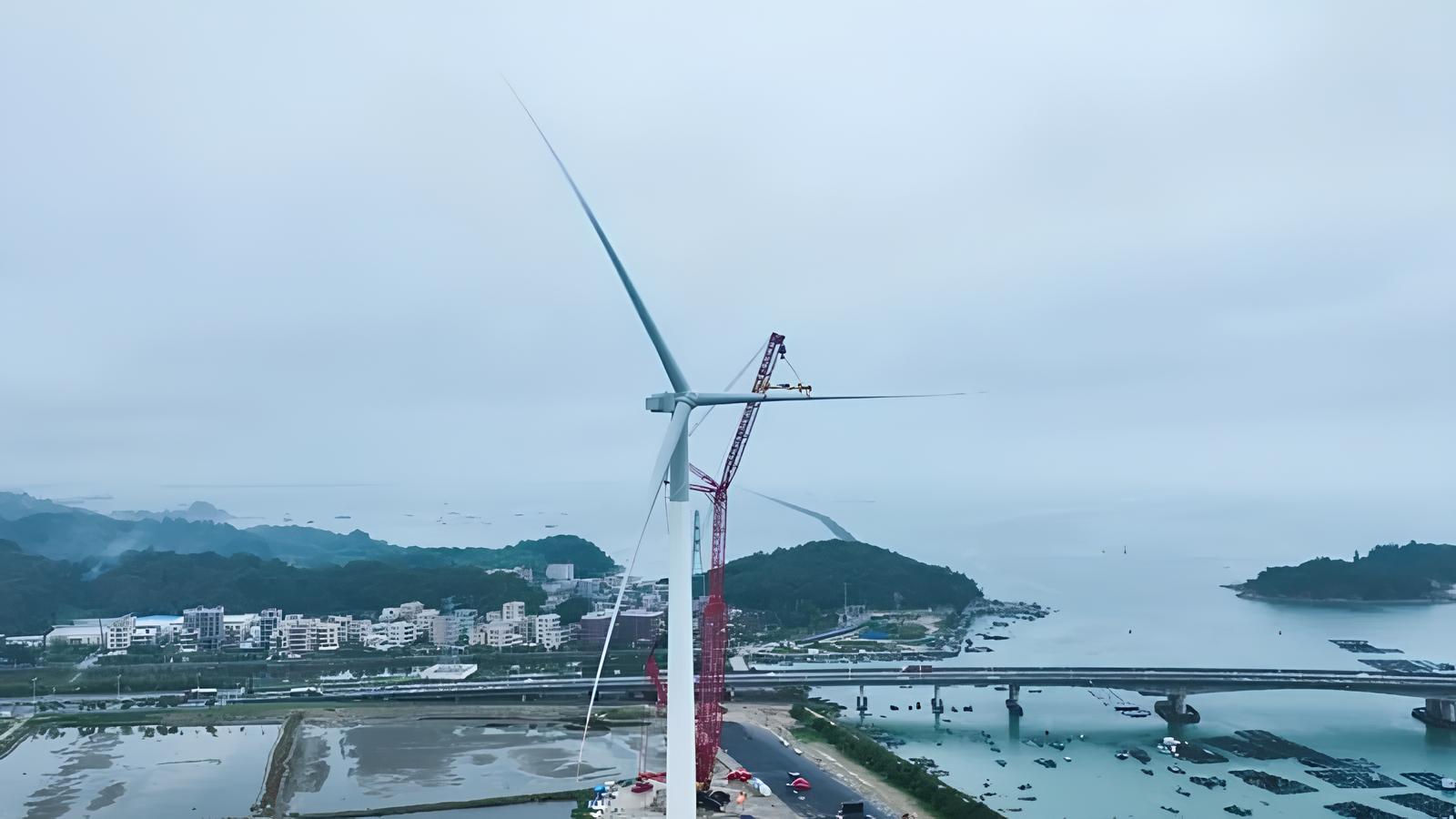
While 2025 marked a record-breaking 170 GW of new wind capacity, analysts at Wood Mackenzie suggest a 6 per cent decline in the coming year. In the United States, the outlook remains complicated by shifting federal policies, even as the nation prepares to add 46 GW of capacity through 2029. To counter these headwinds, researchers are aggressively refining turbine architecture to maximize output from fewer, more powerful units.
Modern turbines, such as the GE Haliade-X, have pushed rotor diameters to 220 metres, with per-unit capacity now exceeding 15 MW. Beyond sheer scale, innovations like the EU-funded LIGHTWIND project by Spanish start-up Optimised Generators aim to solve the high repair costs and weight issues inherent in offshore floating turbines. Simultaneously, radical concepts are emerging to bridge gaps where traditional farms fail. In Sichuan, China, the S2000 Stratosphere Airborne Wind Energy System successfully tested electricity generation from an airship hovering 2 km above ground, while companies like Vortex are testing bladeless, vibration-based cylinders for urban environments where conventional rotors are impractical.
/kalakaumudi/media/media_files/uBrzqeG4z8BQxxYVU344.JPG)


Comments (0)
No comments yet. Be the first!