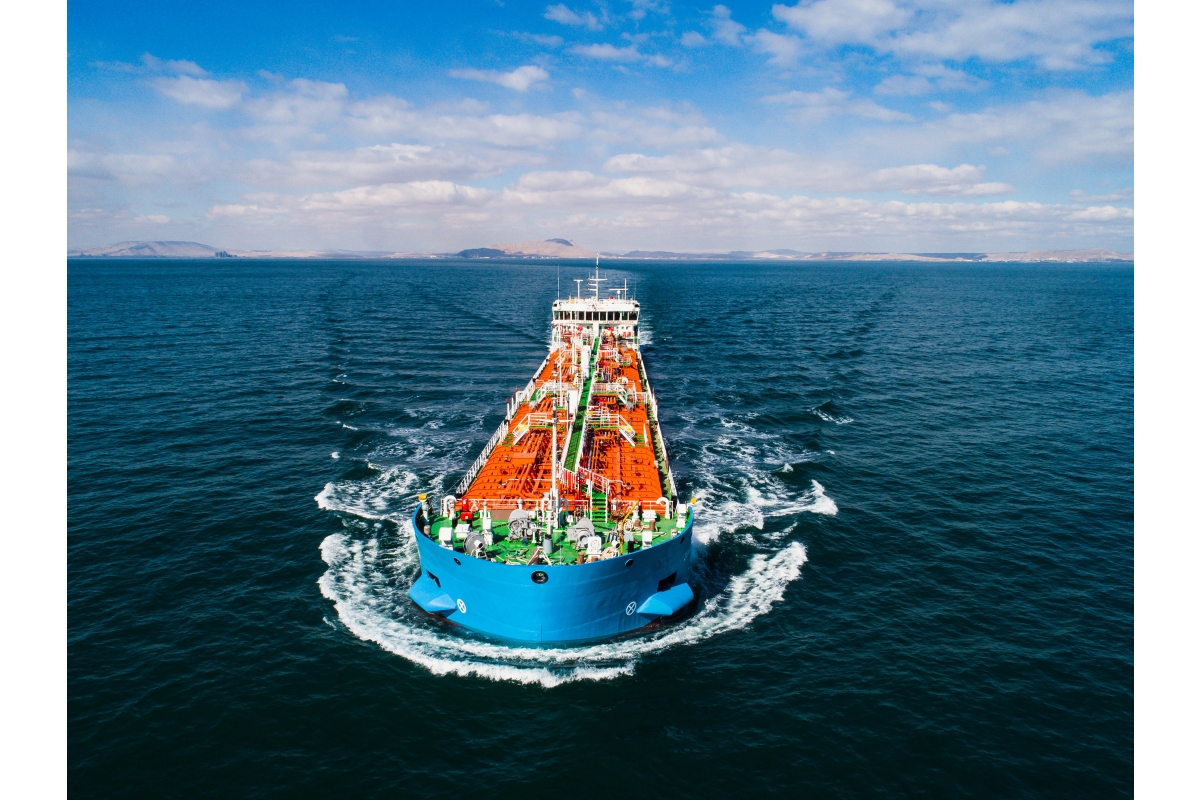
The Tampa-based team comprises approximately 20 civilian and military personnel and will coordinate with other U.S. government agencies, CENTCOM said. The effort is designed to reinforce a naval blockade that the command says has stopped Iran from exporting more than $25 billion worth of crude oil. Washington also says the task force will target illegal revenue streams.
The initiative comes as Iran continues to acquire military-related equipment despite Western sanctions. A Reuters investigation found that military-linked Iranian agencies imported at least $2 billion in hardware, explosives and heavy-duty trucks from January 2025 through June 2026. The goods arrived on ships crossing the Caspian from Russia, trucks from Central Asia and freight aircraft from China.
Farzin Nadimi, a senior fellow at The Washington Institute, told RFE/RL’s Radio Farda that the task force appears intended to coordinate U.S. agencies already tracking sanctions and procurement networks. Naval restrictions have made it harder for Iran to obtain materials for its defense industries, particularly its missile program, from China, he said. Land routes, railways and Caspian shipping through Russia could still carry components, including equipment used in drone production, though in smaller amounts and at higher cost. “Nothing can replace maritime transport because of its enormous capacity,” Nadimi said.
Nadimi cautioned that the task force does not necessarily signal plans to use military force against suspected shipments, though he did not rule out covert operations. Azerbaijani political expert and former diplomat Nahid Jafarov said the team would likely focus on intelligence gathering; whether that information could lead to action is unclear. He also suggested the initiative could pressure Tehran and strengthen Washington’s negotiating position.
The Caspian’s geography complicates enforcement: Iran shares the enclosed sea with Russia, Azerbaijan, Kazakhstan and Turkmenistan, and the United States has no direct territorial access. Analyst Ahmad Alili said the route has become more important for Iran’s commercial goods, energy products and raw materials. Allegations that Russia and Iran use it to transfer military equipment remain difficult to verify independently.
Europe-based analyst Amir Chahaki said Washington could not effectively restrict northern routes without considering Moscow’s response. “It is inconceivable that ships traveling from Russia to Iran could be attacked or targeted by drones. That would mean a direct war with Russia,” he told Radio Farda. Chahaki expects the United States to focus instead on sanctions against cooperating companies and logistics operators.
Trade links between Iran and Russia have expanded in part to reduce exposure to Western sanctions, including through the International North-South Transport Corridor, which connects the countries via Azerbaijan, the Caspian and Central Asia. Lloyd’s List Intelligence reported that active Russian- and Iranian-flagged vessels in the Caspian rose 21 percent year on year in August, though vessel numbers alone do not show that military shipments increased. Shallow waters, limited port infrastructure and rail bottlenecks also constrain the route.
Washington would need cooperation from countries bordering Iran, whose interests differ. Iraq has so far refused a U.S. request to close all but two crossings, Iraqi officials told Ynetnews. Baghdad temporarily shut only one or two as a gesture. Iraq relies on Iran for more than a third of its natural gas, and officials fear unrest among smuggling networks and militias along the roughly 1,600-kilometer border, Ynetnews reported.
Pakistan has taken steps to curb trade while maintaining other ties. On October 16, its Commerce Ministry withdrew an October 3 extension of a temporary waiver from the Electronic Import Form requirement for imports from Iran. The banking document records imports and their payment through banks. The next day, Pakistan suspended commercial trade at two key crossings, leaving about 2,000 trucks stranded on both sides, according to the Quetta Chamber of Commerce and Industry.
A Pakistani official, speaking anonymously to RFE/RL, said trade continued unofficially, including imports of Iranian liquefied petroleum gas. RFE/RL could not independently verify the account. The U.S. Treasury Department was contacted for comment.


Comments (0)
No comments yet. Be the first!