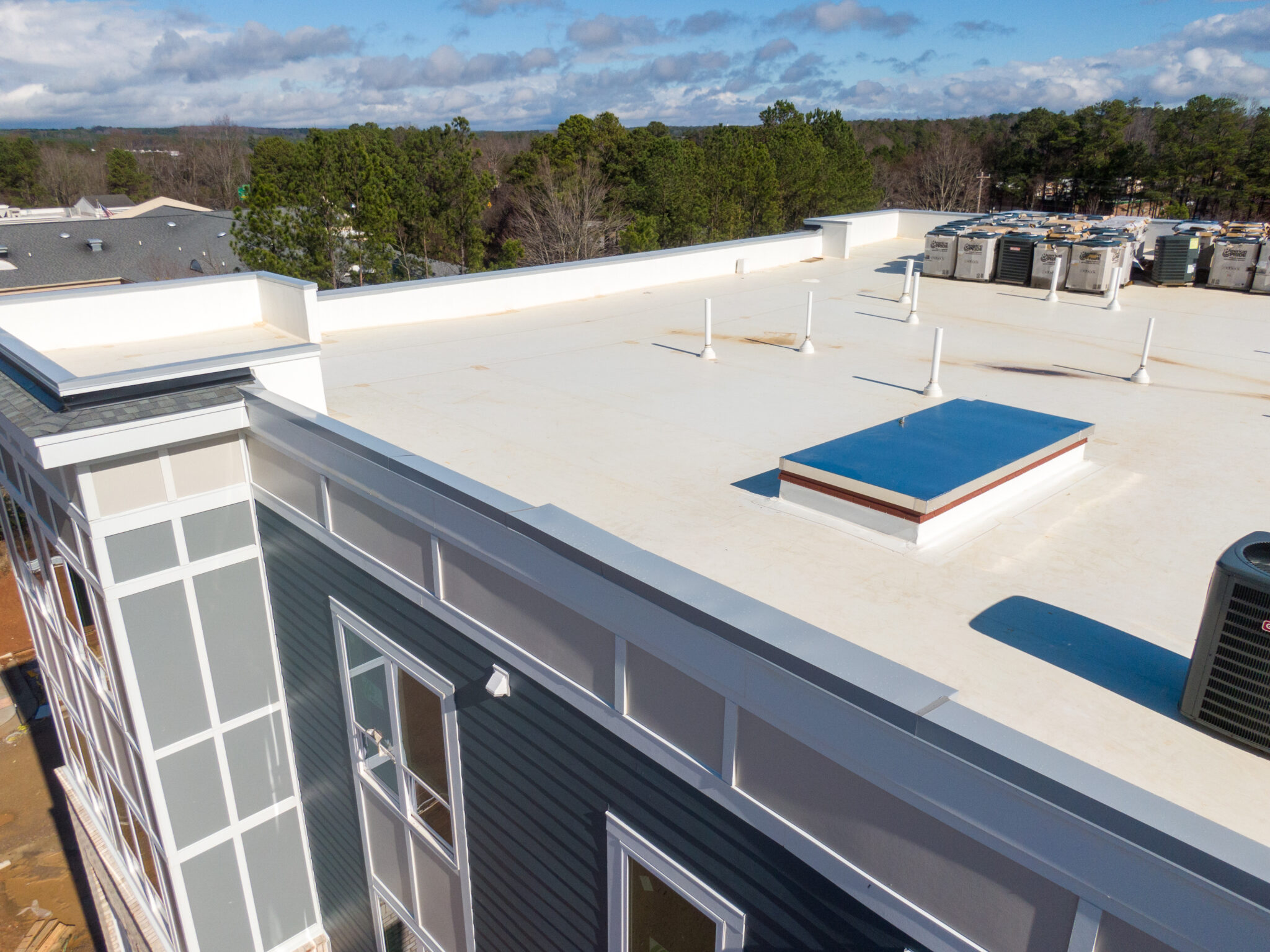
The financial requirements for commercial roofing repairs are rarely uniform. According to Humphrey, the specific membrane—whether TPO, EPDM, PVC, or modified bitumen—serves as the primary cost driver. Each material demands distinct application techniques and proprietary adhesives, meaning a simple patch job on one system may involve significantly different labor hours than another.
Beyond material choice, the physical reality of the site plays a decisive role. Projects hindered by limited access or extreme height often necessitate the use of specialized scaffolding or hydraulic lifts, inflating labor costs regardless of the damage size. Furthermore, the extent of structural compromise, particularly concerning water intrusion and insulation saturation, dictates whether a localized fix is viable or if broader remediation is required.
Drainage remains a critical, often overlooked variable. Standing water accelerates membrane degradation, turning minor seams into major liabilities. Humphrey advocates for professional inspections that account for both the immediate damage and the underlying drainage slope, as addressing these systemic issues during a repair can significantly extend the roof's operational lifespan and reduce long-term capital outlays.



Comments (0)
No comments yet. Be the first!