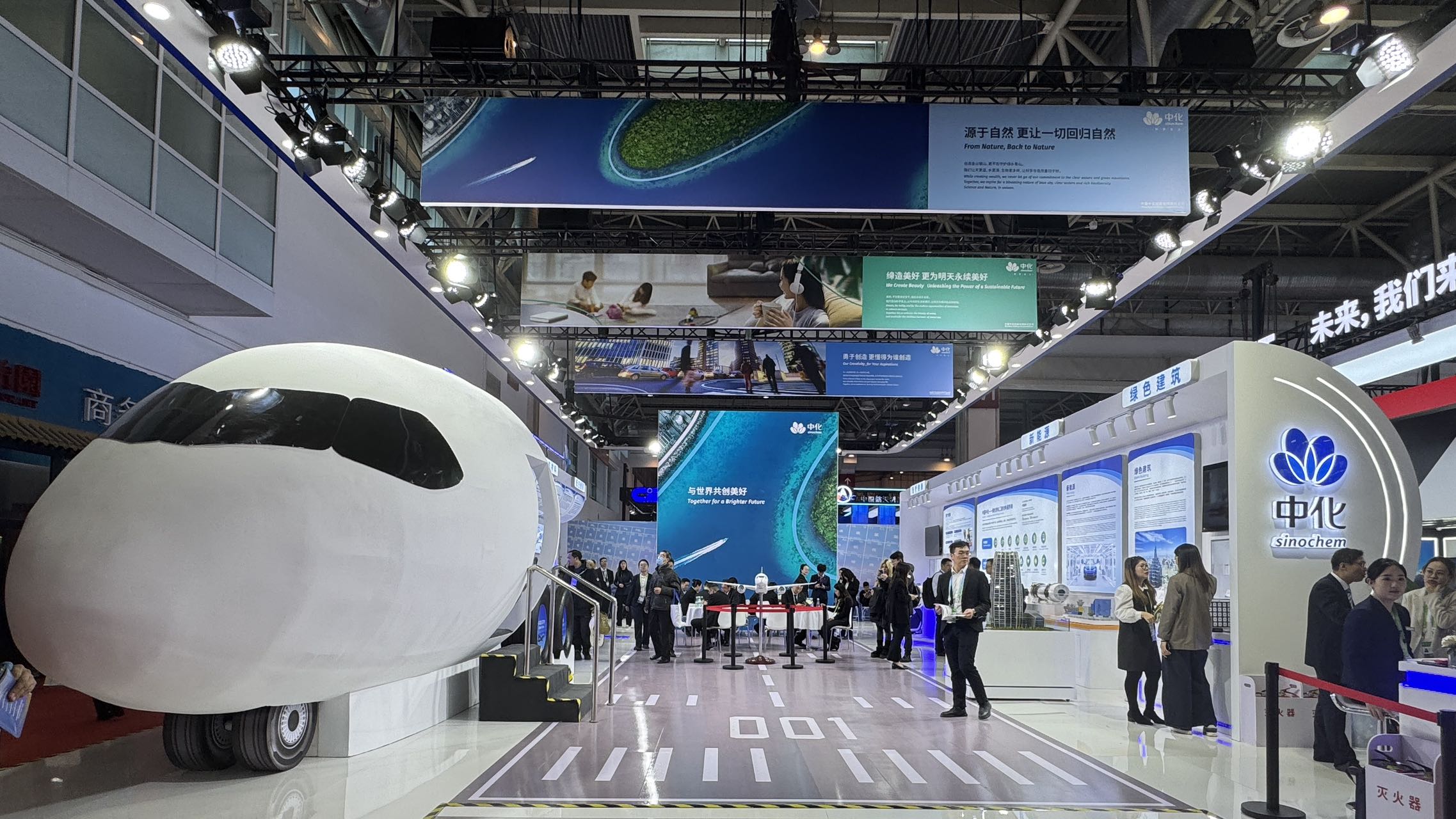
The exhibition highlights the full manufacturing value chain, moving beyond traditional R&D to showcase high-end equipment and intelligent production. Airbus headlines the aviation segment, joining 15 global aerospace manufacturers to map the industry from raw materials to composite recycling. During a joint forum with the Industrial and Commercial Bank of China and the Aviation Industry Corporation of China, stakeholders emphasized the growing necessity of financial integration to sustain aviation infrastructure.
Material science breakthroughs define the exhibition’s innovation corridor. Jilin Chemical Fiber is presenting its T1200-grade ultra-high-strength carbon fiber, currently the strongest industrial-scale material of its kind, with potential use cases spanning from commercial aviation to deep-space exploration. Nearby, Sinochem demonstrates specialized components for humanoid robotics, including biomimetic skin and tendon cables. The Aluminum Corporation of China rounds out the display with high-performance alloys engineered for the C919 passenger aircraft and lightweight automotive frames.
Global participation remains a strategic pillar, with Siemens and Honeywell debuting industrial AI agents and decision-support systems aimed at the Chinese market. The expo also tracks domestic industrial diversification, evidenced by Wuliangye Group’s pivot from its core spirits business into precision machine tools and ultra-high-voltage insulators. By pairing niche SMEs with established multinational leaders, the event aims to bolster supply chain resilience through cross-sector collaboration.



Comments (0)
No comments yet. Be the first!